
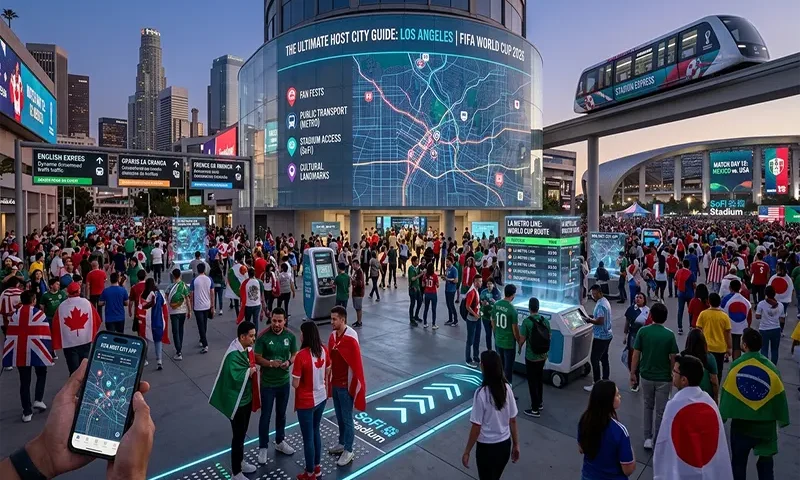
The 2026 FIFA World Cup represents a historic milestone, spanning three host nations—Canada, Mexico, and the United States—with 48 teams competing across 16 world-class venues. For fans, this is more than a soccer tournament; it is a continent-spanning event that requires careful logistical preparation to ensure a seamless experience.
The Geography of the Tournament
The tournament is uniquely distributed across North America. To plan your itinerary, familiarize yourself with the 16 official host cities:
- Canada: Toronto, Vancouver.
- Mexico: Guadalajara, Mexico City, Monterrey.
- United States: Atlanta, Boston, Dallas, Houston, Kansas City, Los Angeles, Miami, New York/New Jersey, Philadelphia, San Francisco Bay Area, Seattle.
Strategy: Follow a Team or Stay in One City?
Deciding your travel style early is the most important step in shaping your tournament experience.
- The “Base-Camp” Approach: Choosing one host city allows you to settle into a rhythm, master local transit, and fully soak in the fan atmosphere without the exhaustion of constant travel. Venues host multiple group-stage matches, meaning you can see several games while avoiding the fatigue of packing and re-orienting.
- The “Multi-City” Adventure: Following a team or traversing regions offers incredible variety but requires meticulous planning. If you choose this path, build “buffer days” into your schedule. Avoid scheduling back-to-back match days in different cities, as travel delays or fatigue can quickly diminish your experience.
Essential Logistical Must-Knows
- Border Crossings: This tournament spans three countries. If you are crossing borders, you must verify entry documentation—such as passports, visas, or specific electronic travel authorizations (e.g., ESTA for the U.S., eTA for Canada)—well in advance.
- Digital Tickets: FIFA utilizes a mobile-first entry system. Download the FWC2026 Mobile Tickets app to manage your tickets. Avoid third-party resale sites, as FIFA strictly voids tickets sold through unauthorized channels. Note that the official tournament companion app (the FIFA World Cup 2026™ app) is for news and guides and cannot be used to access your tickets.
- Stadium Logistics: Do not assume stadiums are located in the city centers. Many, such as SoFi Stadium (Los Angeles/Inglewood) or Levi’s Stadium (San Francisco/Santa Clara), are located miles outside the city core. Map your accommodation relative to the stadium, not just the city name, to save hours in daily commute time.
Host City Spotlights
- Mexico City (Mexico): A cultural powerhouse. Expect vibrant fan festivities, historic architecture, and world-class street food. Stadium transit is best handled by pre-planning routes, as the city’s scale is massive.
- New York/New Jersey (USA): Often the hub for tournament atmosphere and major matchdays. Expect high demand; book your transit and lodging well ahead of time. Use the regional rail network to navigate between New Jersey and NYC.
- Toronto (Canada): Offers excellent accessibility and a cosmopolitan vibe. Its public transit makes getting to the stadium area efficient for fans staying near the city center.
Budgeting & Accommodation
Demand for lodging will be unprecedented. Prices in host city hubs will surge as match dates approach.
- Book Early: Secure your accommodation as soon as your match schedule is locked.
- Proximity vs. Price: Evaluate the cost-benefit of staying further from the stadium. While peripheral hotels may be cheaper, the time and cost spent on daily stadium transit may negate the savings.
Final Advice for the Fan
The 2026 World Cup is a marathon, not a sprint. The atmosphere that builds within the host cities is the highlight of the event. Build time into your itinerary to explore beyond the stadium gates, engage with the local fan culture, and enjoy the journey between matches. By staying organized and prioritizing rest, you ensure your focus remains on the beautiful game.

