
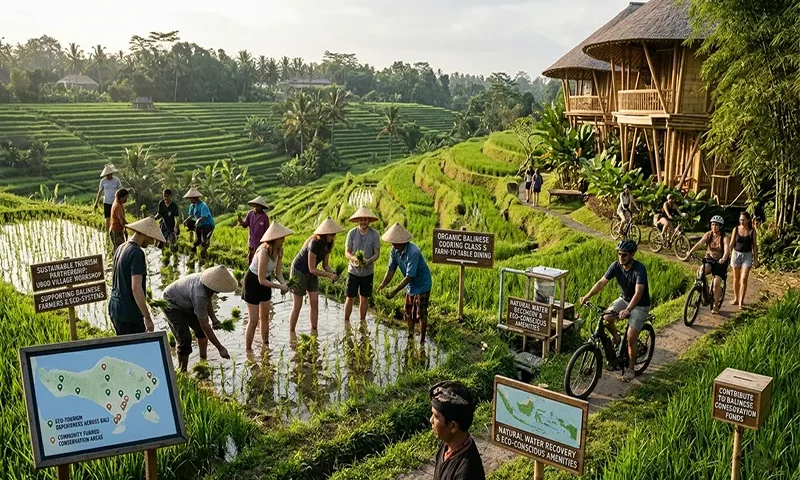
Bali has reached a pivotal moment in its history. As the island continues to welcome millions of visitors annually, the tension between rapid development and environmental preservation has become impossible to ignore. In 2026, the era of the “unconscious tourist” is ending; the future of Bali depends on visitors who act not as mere consumers, but as temporary stewards of this fragile, beautiful landscape.
Sustainable tourism in Bali is not about perfection—it is about a series of intentional, high-impact choices that shift your footprint from damaging to regenerative.
The ‘Conscious Nomad’ Checklist: Daily Habits for Impact
Your daily routine on the island is the most significant tool you have for environmental preservation.
- Refuse and Reuse: Bali is still working to overcome legacy waste challenges. Carrying a high-quality stainless steel or insulated water bottle is non-negotiable. Use the island’s growing network of “Refill My Bottle” stations found in cafes and community hubs rather than purchasing single-use plastic bottles.
- The Transport Shift: Traffic congestion is a primary contributor to air pollution in urban hubs like Canggu and Ubud. Whenever possible, choose electric scooters or utilize local ojek (motorbike taxi) services. If you must use a car, consider ride-sharing apps to consolidate travel, which reduces the number of idling vehicles on the road.
- Energy Mindfulness: The island’s energy grid is under constant pressure. Be a mindful guest: turn off your villa’s air conditioning when you leave the room, unplug unused chargers, and be conservative with water, especially during the dry season.
Supporting the Circular Economy
True sustainability means ensuring your money stays within the Balinese community.
- Market over Mall: Skip the mass-market chain stores. Instead, visit your local pasar (traditional market) for fruit, vegetables, and snacks. Not only does this reduce the carbon footprint associated with imported goods, but it also puts your currency directly into the hands of local farmers and small-scale producers.
- Farm-to-Table Dining: In areas like Ubud, prioritize restaurants that explicitly source ingredients from local regenerative farms. These establishments are the vanguard of the island’s circular food economy, focusing on seasonal availability and reducing “food miles.”
Cultural Stewardship and the Role of the Banjar
To understand sustainability in Bali, you must understand the Banjar. The Banjar is the local community council—the heartbeat of Balinese village life. They are responsible for everything from religious ceremonies to village-wide waste management and environmental cleanup efforts.
- Respecting Sacred Spaces: When visiting temples, stay strictly on marked paths. Soil compaction and human erosion are real threats to historic sites.
- Participation: If you see a local community gotong royong (community work day/cleanup) occurring, observe with respect. If you want to contribute, ask your host or local guide how you can support the Banjar’s current environmental initiatives.
Identifying Authentic Sustainability (Avoiding ‘Greenwashing’)
In 2026, many hotels claim to be “eco-friendly,” but not all live up to the label. To spot legitimate operators, look for:
- Third-Party Certifications: Look for recognized standards like EarthCheck or local community-driven sustainability awards that track actual data on energy, water, and waste reduction.
- Transparency: Does the property have a visible waste-sorting system? Do they support local schools or conservation projects? Authentic eco-hotels are usually eager to share their data and their partnerships with local community groups.
Giving Back: Volunteer with Purpose
Bali has a wealth of locally led organizations doing vital work, from coral reef restoration in North Bali to forest preservation in the interior.
- Vet Before You Volunteer: Avoid “voluntourism” programs that charge high fees for minimal community impact. Prioritize initiatives that are managed by local NGOs or those with long-standing community partnerships.
- The Power of Small Actions: Sometimes the most helpful act is simply showing up to a community-led beach cleanup or attending a workshop that educates visitors on local conservation issues.
The Power of Slow Travel
The most sustainable choice you can make in 2026 is to embrace Slow Travel. By staying in one place for longer, you reduce the carbon footprint associated with constant inter-island travel and allow yourself the time to build meaningful, respectful relationships with the local community.
Sustainability in Bali is a partnership between the visitor and the host. When you treat the island as a living, breathing community rather than a static backdrop for your vacation, you contribute to a future where Bali can remain the vibrant, spiritual, and ecological sanctuary it has always been.

