
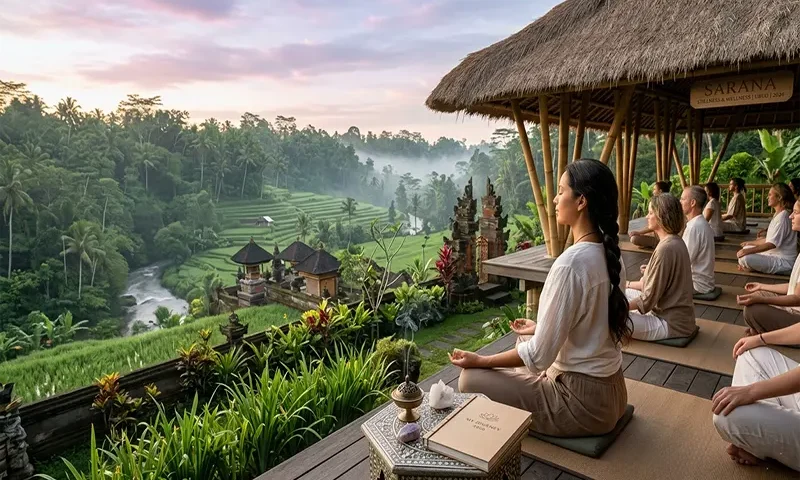
In the lush, mist-covered valleys of Ubud, there exists a palpable frequency—a sense of stillness that seems to emanate from the very soil. For centuries, this region has been the spiritual heart of Bali, a sanctuary where the ancient Balinese philosophy of Tri Hita Karana—the harmony between people, nature, and the Divine—is not just an idea, but a lived experience.
In 2026, the wellness traveler is evolving. We are moving away from the superficial “Instagrammable” spa treatments and toward authentic spiritual work. Whether you seek to purge long-held stress or reconnect with a dormant sense of self, Ubud offers a spectrum of healing that is as varied as it is profound.
The Healing Spectrum: Four Paths to Rejuvenation
When selecting a retreat, it is essential to understand that not all “wellness” is created equal. Here are four distinct paths to healing in Ubud:
1. The Traditional Healer Focus: The Balian Connection
There are retreats that center on the Balian—traditional Balinese healers who act as conduits for spiritual and physical restoration. These experiences often involve purification ceremonies at holy water springs (Melukat). It is raw, intense, and deeply rooted in local lineage.
- Best for: Those seeking a spiritual breakthrough or an authentic connection to Balinese mysticism.
2. The Yoga & Meditation Immersion
For the practitioner who wants to go deeper, these retreats offer structured daily practices of Vinyasa, Yin, and silent meditation. These are designed to physically release the tension held in the fascia while training the mind to dwell in the present.
- Best for: Those looking to refine their physical practice and build the discipline of a consistent meditation habit.
3. The Holistic Detox Center
These programs are evidence-based, focusing on the synergy between plant-based nutrition, therapeutic cleanses (such as guided liver support or colonics), and restorative bodywork. It is a rigorous physical and mental reset.
- Best for: Those suffering from physical burnout, digestive lethargy, or the “fog” of modern, high-stress living.
4. The Silent/Monastic Style
Stripping away the noise of the outside world, these retreats are designed for deep introspection. Often, you are asked to relinquish your devices upon arrival, shifting the focus entirely to internal reflection and silent contemplation.
- Best for: Those who feel over-stimulated and need to reclaim their cognitive clarity.
Understanding the Balinese Context
Balinese healers operate on a philosophy fundamentally different from Western life coaching. While a coach may provide tools for professional success, a Balinese healer works to restore the sekala (seen) and niskala (unseen) balance of the individual. They believe that physical ailments are often manifestations of blocked energy or karmic imbalance. To engage with these practitioners is to accept a perspective where wellness is not just an individual state, but a result of one’s relationship with the community, the ancestors, and the land itself.
How to Choose Your Path
Before booking, use this framework to ensure the retreat aligns with your intent:
- Primary Goal: Are you looking to “unplug” from technology (Silent), physically reset (Detox), deepen your practice (Yoga), or heal a specific emotional or spiritual wound (Traditional/Balian)?
- Community Level: Are you seeking a solitary, monastic-style experience, or do you thrive in a community-based environment where you can share your journey with others?
Preparation and Etiquette: Arriving in the Right Headspace
Healing begins before you arrive.
- The Pre-Retreat Detox: A week before your trip, begin cutting out alcohol, caffeine, and processed sugars. This clears the slate, allowing the benefits of your retreat to take hold much faster.
- Cultural Respect: Ubud is a sacred space. When visiting local shrines, always wear a sarong and sash. Furthermore, take the time to participate in a Canang sari offering ritual. It is a small act of gratitude that aligns your energy with the Balinese way of living.
The ‘After-Glow’: Returning Home
The greatest danger of a retreat is the “boomerang effect”—returning to your old life and instantly losing the peace you cultivated. To integrate your experience:
- Protect the Transition: Don’t schedule a flurry of meetings the day you return. Give yourself 48 hours of “soft landing” time.
- Ritualize the Small Things: Keep one piece of your Ubud routine. Whether it is 10 minutes of morning meditation or the daily practice of gratitude, integrate it into your urban life as a permanent anchor.
Opening the Door
A spiritual retreat is not a magic bullet; it is a door. Ubud provides the sanctuary and the expertise to help you step through that door and confront the parts of yourself that need healing. However, the true work—the integration, the boundary-setting, and the maintenance of that hard-won stillness—begins only when you pack your bags and head back into the world. You are not just seeking a break; you are seeking a recalibration that can last a lifetime.

