
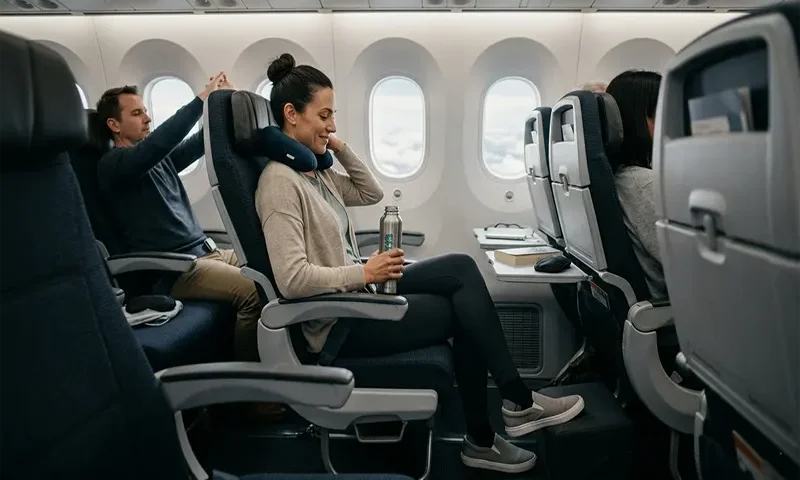
For the frequent traveler, the long-haul flight is often an exercise in physiological endurance. Between the drop in cabin pressure, the lack of mobility, and the exceptionally dry air, your body undergoes significant stress. The result is a common “traveler’s fatigue”: painful, stiff joints and an uncomfortable, bloated midsection.
However, by understanding the mechanics behind these symptoms and implementing a few strategic habits, you can arrive at your destination feeling refreshed rather than depleted.
The Physiology of Flight Discomfort
When you fly, your body deals with three primary environmental stressors:
- Reduced Cabin Pressure: As the plane reaches cruising altitude, cabin pressure drops. This causes gases trapped in your digestive tract and tissues to expand, leading to the sensation of bloating.
- Low Humidity: Airplane cabins typically have humidity levels below 20%, which is drier than a desert. This rapid dehydration impacts your joints; cartilage relies on high water content to remain plump and act as a shock absorber. When dehydrated, these cushions stiffen, leading to back, neck, and knee aches.
- Inactivity: In the confined space of an economy seat, your “muscle pump”—the natural action of your calf muscles squeezing veins to return blood to the heart—is neutralized. This leads to blood pooling, ankle swelling, and increased joint pressure.
The Science of Movement: Keeping Circulation Active
The key to preventing stiffness is to counteract prolonged immobility. Since your calf muscles are the “second heart” of your lower body, activating them is paramount.
Seated Exercises to Perform Every Hour:
- Ankle Circles: Lift your feet and draw circles in the air with your toes to promote blood flow.
- Foot Pumps: Keep your heels on the floor and lift your toes as high as possible, then alternate by pressing your toes down and lifting your heels. This mimics the pumping action of walking.
- Knee Lifts: While seated, gently pull one knee toward your chest at a time to release hip and lower-back tension.
- Glute Squeezes: Contract and release your glutes repeatedly to stimulate blood flow through the pelvic region.
Combating In-Flight Bloat
Bloating is often a result of both air expansion and poor digestion. By being selective about what you consume, you can minimize that “heavy” feeling.
- The ‘Don’ts’: Avoid carbonated drinks, which introduce extra gas into your system. Steer clear of high-sodium snacks (like pretzels or salted nuts), which cause water retention. Finally, limit alcohol and caffeine, as both are diuretics that dehydrate your tissues.
- The ‘Dos’: Prioritize aggressive hydration with flat water. If you need a flavor boost, opt for ginger or peppermint tea, both of which are natural aids for digestion and nausea. Eat slowly and choose lighter, easily digestible meals—lean proteins and small portions of low-fiber carbohydrates are better choices than heavy, fried, or high-fiber foods that require significant digestive energy.
Ergonomic Optimization
Your seat configuration dictates your level of strain.
- Support the Spine: Place a lumbar pillow (or a rolled-up jacket) behind the small of your back to maintain your spine’s natural curve.
- Elevate Your Feet: Use a footrest, or place your carry-on bag beneath your feet to elevate your knees slightly. This reduces pressure on your lower back.
- Avoid the ‘Leg Cross’: Crossing your legs at the knees or ankles restricts blood flow and increases the risk of deep-vein thrombosis. Keep both feet flat on the floor or the footrest.
The Role of Compression
Compression socks are perhaps the most effective tool in a traveler’s arsenal. In 2026, these are no longer reserved for those with medical conditions; they are standard gear for the savvy traveler.
Graduated compression socks apply the highest pressure at the ankle, which gradually decreases as the sock moves up the calf. This encourages blood to return to the heart, significantly reducing swelling and joint pain. For most travelers, a moderate compression level of 15–20 mmHg is ideal. Be sure to put them on before you board, while your legs are still at their least swollen state.
Post-Flight Recovery
Once you land, your body is effectively playing “catch-up” with sea-level pressure and hydration.
- Immediate Mobilization: Walk briskly through the terminal. This 10-to-15-minute period of active movement is critical for flushing fluids that pooled during the flight.
- Re-hydrate: Drink 16 ounces of water within the first hour of landing.
- Full-Body Stretch: Once at your hotel, focus on a “Forward Flex”—slowly reaching for your toes—and an “Overhead Reach” to lengthen the spine and release the tension accumulated from hours of sitting.
By viewing the flight not as “dead time” but as an environment to be managed, you can turn an exhausting journey into a period of proactive self-care. Your joints will thank you, and you’ll be ready to enjoy your arrival rather than needing a day to recover.

