
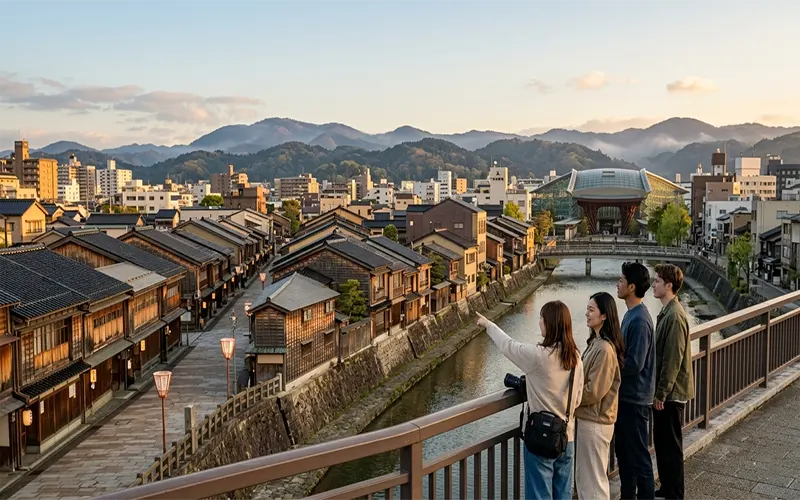
For many first-time travelers, the Japanese experience is framed by the rhythmic intensity of Tokyo and the ancient grandeur of Kyoto. This “Golden Route” is undeniably spectacular, but in 2026, the modern traveler is increasingly looking for something else: depth, stillness, and the chance to experience Japan on a human scale.
Regional Japan offers a different frequency—one where the pace slows to the turn of the seasons and the local character is felt in every bowl of noodles and every quiet temple path. If you are ready to venture beyond the neon, here are five cities that promise a profound connection to the heart of the country.
1. Kanazawa: The Samurai’s Retreat
Often referred to as “Little Kyoto,” Kanazawa offers the historical weight of its famous counterpart without the overwhelming crush of tourism. Located on the Sea of Japan, it is a city of refined aesthetics.
- The Vibe: Elegant, preserved, and sophisticated.
- Must-Do: Wander through the Nagamachi Samurai District, where mud-walled residences evoke the Edo period, followed by a visit to Kenrokuen, widely considered one of the three most beautiful landscape gardens in the country.
- Culinary Specialty: Kaisendon (seafood rice bowls) featuring fresh catches from the Sea of Japan, particularly the sweet shrimp and crab.
2. Fukuoka: The Street-Food Capital
Situated on the northern shore of Kyushu, Fukuoka is Japan’s most dynamic gateway to the continent. It feels entirely different from the Honshu metropolises, leaning into a laid-back, coastal energy.
- The Vibe: Energetic, youthful, and globally minded.
- Must-Do: Experience the yatai culture along the Naka River. These small, open-air food stalls are where locals and travelers mingle over steaming bowls of soup, creating an intimate, communal atmosphere found nowhere else in Japan.
- Culinary Specialty: Hakata Ramen—a rich, creamy tonkotsu (pork bone) broth that is legendary across the nation.
3. Takamatsu: The Gateway to Art
Takamatsu, the capital of Kagawa Prefecture, serves as the perfect base for exploring the Seto Inland Sea. It is a city that bridges the gap between traditional Japanese history and contemporary global art.
- The Vibe: Artistic, breezy, and contemplative.
- Must-Do: Use Takamatsu as your hub to ferry-hop to the “Art Islands” like Naoshima and Teshima, where world-class architecture and installations are integrated into the island landscapes.
- Culinary Specialty: Sanuki Udon. Kagawa is the “Udon Kingdom,” and the noodle shops here are a pilgrimage site for food lovers. Simple, chewy, and perfect.
4. Sendai: The City of Trees
Sendai is a refreshing urban center in the Tohoku region, known for its wide, tree-lined boulevards and its proximity to some of Japan’s most dramatic coastal scenery.
- The Vibe: Intellectual, airy, and outdoorsy.
- Must-Do: Take a short train ride to Matsushima Bay, celebrated for centuries as one of Japan’s “three most scenic views,” featuring hundreds of pine-covered islets rising from the water.
- Culinary Specialty: Gyutan (grilled beef tongue). It’s a Sendai institution, usually served with barley rice and oxtail soup.
5. Matsuyama: The Onsen Classic
Located on the island of Shikoku, Matsuyama is a city steeped in literature and tradition, offering one of the most quintessential hot spring experiences in the country.
- The Vibe: Literary, nostalgic, and deeply relaxing.
- Must-Do: Visit Dogo Onsen, one of Japan’s oldest and most famous hot springs. The main building, a stunning Meiji-era structure, is said to have inspired the bathhouse in the film Spirited Away.
- Culinary Specialty: Tai-meshi (sea bream rice). Whether served as sashimi over rice or cooked in a clay pot, the local sea bream is a delicacy you shouldn’t miss.
Logistics: The Ease of Regional Travel
In 2026, traveling outside the major hubs is easier than ever. The JR Pass remains a powerful tool, but the real game-changer is regional airport connectivity. Many of these cities have airports that connect directly to major hubs (or even international gateways), meaning you can bypass Tokyo entirely if you choose. With high-speed internet and real-time translation apps, navigating local bus routes or finding hidden izakaya in these smaller cities is virtually seamless.
The ‘Local’ Mindset
To truly appreciate these regions, shift your approach. In a smaller city, you are not just a tourist; you are a guest. A few basic Japanese phrases—sumimasen (excuse me) and arigato gozaimasu (thank you)—go a long way. Prioritize family-run minshuku (guesthouses) or locally-owned cafes over international chains. These businesses are the soul of the community, and supporting them often leads to the most memorable interactions of your trip.
The Joy of Serendipity
When you step off the “Golden Route,” you gain something invaluable: the element of surprise. Whether it is stumbling upon a local festival in a quiet temple courtyard or sharing a conversation with a shopkeeper who has lived in the same neighborhood for fifty years, regional Japan offers a depth of connection that the major hubs cannot replicate.
By venturing into these underrated gems, you aren’t just visiting a country—you are discovering a thousand different versions of Japan, each waiting to be explored at its own gentle, authentic pace.

