
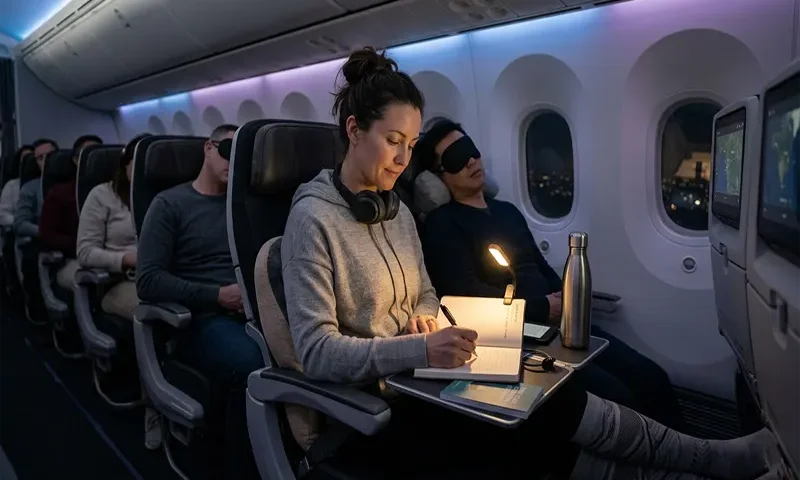
There is perhaps no more frustrating experience for the modern traveler than the “wide-awake” overnight flight. You board the aircraft with every intention of falling into a deep, restorative slumber, only to find yourself staring at the back of the seat in front of you as the hours tick away. The cabin is dark, your neighbors are snoring, and the anxiety of the upcoming day creates a mental loop that makes sleep feel impossible.
In 2026, the key to surviving these flights isn’t just about forcing sleep—it’s about mastering the art of “deep rest.” By shifting your perspective from “I must sleep” to “I will prioritize nervous-system recovery,” you can transform a period of frustrating insomnia into a surprisingly restorative interlude.
Creating the ‘Rest Cocoon’
When the body feels exposed, it remains on high alert. To rest, you must first signal safety to your nervous system.
- Sensory Deprivation: Invest in a contoured, 3D eye mask that blocks 100% of light without putting pressure on your eyelids. Pair this with high-fidelity, active noise-canceling headphones. Silence isn’t just the absence of sound; it’s the presence of calm.
- The Layering Trick: Cabin temperatures are notoriously unreliable. Use your jacket or a travel blanket to create a “cocoon” that feels insulated. If your feet are cold, your body will struggle to relax; prioritize keeping your extremities warm.
- The Sanitization Ritual: It sounds minor, but wiping down your tray table and armrests with a fresh-scented, high-quality antibacterial wipe creates a sense of “clean” space. When you feel physically “contained” in a clean environment, the brain is less likely to register your surroundings as a threat.
The Mind-Calming Toolkit: Exercises for the Seat
If your brain is buzzing, you need physical techniques to force a shift in your physiology.
1. The 4-4-6 ‘Landing Breath’
Rhythmic breathing is the fastest way to signal the parasympathetic nervous system to “downshift.”
- Inhale deeply through your nose for a count of 4.
- Hold the breath for a count of 4.
- Exhale slowly through pursed lips for a count of 6.
- Repeat this for ten cycles. The longer exhale is the “switch” that forces your heart rate to slow.
2. Seated Progressive Muscle Relaxation (PMR)
Start at your toes. Tense the muscles in your feet as hard as you can for five seconds, then release them completely. Move up to your calves, then your thighs, your stomach, your shoulders, and finally your face. By forcing tension and then releasing it, you trick your body into a state of physical surrender.
3. Cognitive Distraction
If you find yourself thinking about emails or tomorrow’s meetings, you need a “brain-quieting” distraction. Avoid thrillers or complex films. Instead, opt for “sleep stories,” non-fiction audiobooks on dull topics, or slow-paced ambient soundscapes. These provide just enough stimulation to occupy the analytical part of your brain without triggering the “alert” response.
The 20-Minute Rule
If you have been lying there for 20 minutes and the frustration is rising, do not stay in the same position. The seat will start to feel like a cage.
- Reset the Scene: Physically stand up. Do a slow, controlled stretch in the aisle.
- Change the Input: Read a physical book for ten minutes (with a dim light) or look through your camera roll at photos of a favorite place.
- Re-enter: Once you feel a slight dip in your mental alertness, return to your seat and restart your breathing protocol.
The Physiology of ‘Resting’
It is crucial to understand that resting is not a failure of sleep. Even if you do not drift off, simply closing your eyes, relaxing your muscles, and listening to calming audio provides the brain with a “beta-wave” reduction. You are resting your eyes, slowing your heart rate, and allowing your muscles to recover from the sedentary posture of the flight. Research suggests that this “quiet wakefulness” is significantly more restorative than the frantic energy expenditure of phone-scrolling or constant fidgeting.
Pre-Flight & Post-Flight Mindset
The battle for sleep starts hours before you board.
- Avoid the ‘Triggers’: Caffeine has a half-life of several hours; cut it off by early afternoon. Alcohol may help you drift off, but it will ruin your sleep architecture, leading to fragmented rest and a groggier morning.
- Land with Intention: Once you land, your goal is to “reset.” Seek out natural sunlight as soon as possible, stay aggressively hydrated, and resist the urge to nap for longer than 20 minutes.
In 2026, we are learning that productivity is not the goal of travel—restoration is. If you cannot sleep, don’t punish yourself. Treat the flight as a quiet, dedicated time for self-care. By leaning into the rest rather than fighting for the sleep, you will arrive at your destination with a clearer mind and a steadier pulse, regardless of how many hours you actually spent in a dream state.

