
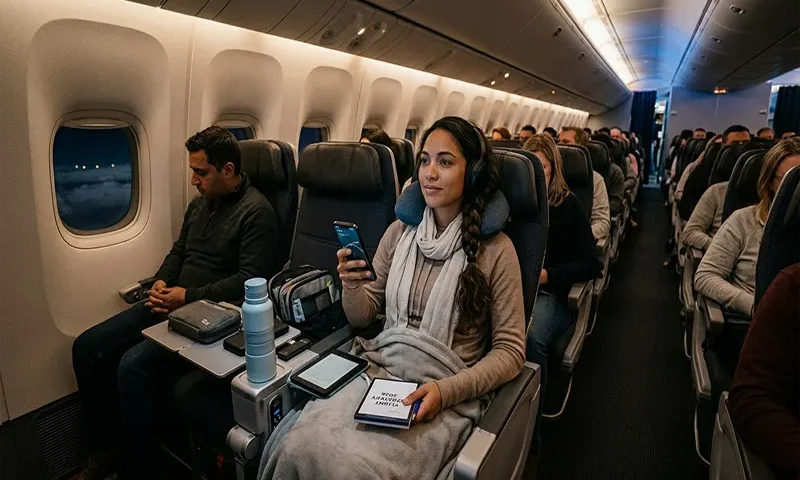
Long-haul travel is, by its very nature, an endurance test. In 2026, as flight paths grow longer and airlines push the boundaries of ultra-long-haul routes, the economy class experience can either be a exhausting blur or a surprisingly manageable part of your journey. The secret isn’t a miraculous upgrade to business class; it is the art of strategic, intentional preparation. By transforming your carry-on into a curated survival kit and mastering the logistics of cabin life, you can arrive at your destination refreshed rather than depleted.
The Pre-Flight Strategy: Setting the Stage
True comfort begins hours, or even days, before you reach the airport. The physical environment of the plane—recirculated air, limited space, and high-altitude pressure—requires you to proactively manage your physiology.
Smart Seat Selection
Never accept a random assignment. Use tools like SeatGuru or Aerolopa to analyze the specific configuration of your aircraft. While the aisle seat offers the freedom to stand, stretch, and pace the cabin without asking neighbors to move, the window seat provides a wall to lean against for sleep. If you are tall, paying for an exit row or bulkhead seat is worth every cent for the extra legroom. Pro tip: Avoid seats near the galley or the lavatories; the constant foot traffic and light pollution from crew areas are detrimental to sleep.
Pre-Departure Logistics
Manage your internal clock before you board. Gradually adjust your sleep schedule toward your destination’s time zone for two days prior. Furthermore, hydration is your primary defense against fatigue. Start increasing your water intake 24 hours before departure; once you are in the air, the dry cabin air will dehydrate you twice as fast.
The Essential ‘Comfort Kit’
In 2026, the best travel gear is lightweight, multi-functional, and tech-forward. Your carry-on should be divided into a “Seatback Pocket” for quick access and a “Main Stash” for items needed only during rest.
Wearables: The Layering System
Cabin temperatures fluctuate wildly. Opt for natural, breathable fabrics like merino wool, which regulates temperature and resists odors.
- Compression Socks: Non-negotiable for flights over five hours. They are essential for preventing deep vein thrombosis (DVT) and reducing post-flight leg swelling.
- Footwear: Wear slip-on shoes. Your feet will swell in flight, and the ability to easily slide your shoes on and off—and keep your feet comfortable in compression socks—is a game-changer.
Rest & Ergonomics
The goal is to replicate the sensation of a private space.
- Neck Support: The “U-shaped” pillow is often inadequate. Consider wrap-around designs (like the Trtl) that provide structural support for your head, preventing the “nod-off” jolt that ruins deep sleep.
- Sensory Deprivation: High-fidelity noise-cancelling headphones are the most important investment you can make. Complement these with a contoured 3D eye mask, which puts zero pressure on your eyelids and blocks out 100% of cabin light.
Tech & Connectivity
Modern aircraft are increasingly offering robust Wi-Fi, but you should never rely on it.
- Bluetooth Adapters: Most in-flight entertainment (IFE) screens still require wired jacks. A compact Bluetooth transmitter allows you to use your own noise-cancelling headphones with the plane’s system.
- Power Management: Ensure your power bank is fully charged and accessible. While many 2026 aircraft have USB-C and AC power at every seat, connectivity can be glitchy—always have a backup.
Hygiene & Wellness
The “freshness” factor is what separates the seasoned traveler from the weary tourist.
- The Mini-Kit: Pack a small, quart-sized pouch with a high-quality moisturizer, a cooling facial mist, and a lip balm. The low humidity in the cabin will strip moisture from your skin; applying these products mid-flight makes a significant difference.
- Sanitization: Bring a pack of heavy-duty antibacterial wipes. Wipe down your tray table, IFE screen, and armrests the moment you board.
In-Flight Survival Habits
Once you are in the air, your behavior dictates your recovery time upon landing.
1. Move Often: Set a timer on your phone or watch to move every 90 minutes. Walk the aisles, perform simple calf raises, and stretch your shoulders. Circulation is the antidote to the “stuck-in-a-tube” feeling.
2. Nutrition for Stability: Avoid the heavy, sodium-laden main courses if possible. Sodium causes bloating, which is exacerbated by altitude. Instead, prioritize the hydration you brought with you—keep your reusable water bottle filled by the crew. If you are flying long-haul, consider skipping the mid-flight snack to give your digestive system a break.
3. Strategic Sleep: If you are chasing a new time zone, aim to sleep only when it is nighttime at your destination. Use your eye mask and headphones to signal to your brain that it is time to shut down, regardless of what your neighbor is doing.
Arriving Refreshed
Long-haul economy travel is an exercise in managing small, controllable variables. By curating your comfort kit, selecting your seat with care, and remaining disciplined about hydration and movement, you strip away the chaos of the environment. You aren’t just surviving the flight; you are arriving at your destination ready to hit the ground running. When you treat the economy cabin as a space for intentional self-care, the distance between you and your destination becomes just a quiet, comfortable interlude.

